Buy milieusticker.eu ?
We are moving the project
milieusticker.eu .
Are you interested in purchasing the domain
milieusticker.eu ?
domain@kv-gmbh.de · 0541-91531010
Buy milieusticker.eu ?
What is the difference between strictly monotonic increasing and monotonic increasing?
Strictly monotonic increasing means that the function is always increasing and never stays the same, while monotonic increasing means that the function is always increasing or staying the same. In other words, a strictly monotonic increasing function will always have a positive slope, while a monotonic increasing function can have a zero slope at certain points. Therefore, strictly monotonic increasing functions are a subset of monotonic increasing functions. **
What is monotonic behavior?
Monotonic behavior refers to a consistent and unidirectional trend in a set of data or a mathematical function. In a monotonic increasing function, the values consistently increase as the input variable increases. Conversely, in a monotonic decreasing function, the values consistently decrease as the input variable increases. Monotonic behavior is important in various fields such as economics, engineering, and mathematics, as it helps in understanding and predicting the behavior of systems and processes. **


Similar search terms for Non-monotonic
Top-Angebote
Products related to Non-monotonic:
-
ENVIRONMENT Diffuser Inspired by The Wynn Hotel® - 200mLVegan and cruelty-free. Diffuser that is inspired by The Wynn Hotel®. Juicy green melon and nectarine blend into a heart of jasmine and lily ending with notes of blackberry and oakmoss.39,28 $*Shipping: 0,00 $Secure redirect to the provider
-
Hama Tahiti Indoor Temperature & humidity sensor Mechanical environment thermometerHama Tahiti. Purpose: Indoor, Sensor type: Temperature & humidity sensor, Type: Mechanical environment thermometer. Width: 110 mm, Depth: 42 mm, Height: 130 mm. Package width: 135 mm, Package depth: 115 mm, Package height: 45 mm. Sustainability certificates: Forest Stewardship Council (FSC)22,49 £*Shipping: 0,00 £Secure redirect to the provider




-
What is the difference between strictly monotonic decreasing/increasing and monotonic increasing/decreasing?
Strictly monotonic decreasing/increasing means that the function is either always decreasing or always increasing, without any flat regions or plateaus. Monotonic decreasing/increasing, on the other hand, allows for flat regions where the function remains constant. In other words, strictly monotonic functions do not have any horizontal sections, while monotonic functions may have horizontal sections. **
-
What is the difference between strictly monotonic increasing/decreasing and monotonic increasing/decreasing?
Strictly monotonic increasing/decreasing means that the function is either always increasing or always decreasing, without any flat regions or plateaus. Monotonic increasing/decreasing, on the other hand, allows for the possibility of flat regions or plateaus where the function remains constant. In other words, strictly monotonic functions do not have any horizontal sections, while monotonic functions may have some. **
-
What is strictly monotonic now?
A function is strictly monotonic if it is either strictly increasing or strictly decreasing. This means that for any two points in the function's domain, the function values at those points are either strictly increasing or strictly decreasing. In other words, the function does not have any plateaus or flat regions where the function values remain constant. **
-
Is every convergent sequence monotonic?
No, not every convergent sequence is monotonic. A convergent sequence is one that approaches a specific limit as the number of terms in the sequence increases. A monotonic sequence, on the other hand, is one that is either always increasing or always decreasing. While some convergent sequences may be monotonic, there are also convergent sequences that oscillate or have a mix of increasing and decreasing terms as they approach their limit. Therefore, not every convergent sequence is monotonic. **

How do you indicate that a function is strictly increasing or non-monotonic in an interval i?
To indicate that a function is strictly increasing in an interval i, you would show that for any two points a and b in the interval i, where a < b, the function value at a is less than the function value at b, i.e., f(a) < f(b). This would demonstrate that the function is strictly increasing in the interval i. To indicate that a function is non-monotonic in an interval i, you would need to show that there exist points a and b in the interval i, where a < b, such that the function value at a is less than the function value at b, and also points c and d in the interval i, where c < d, such that the function value at c is greater than the function value at d, i.e., f(a) < f(b) and f(c) > f(d). This would demonstrate that the function is non-monotonic in the interval i. **
How can one recognize monotonic behavior?
Monotonic behavior can be recognized by observing a consistent trend in the data where it either consistently increases or decreases without any significant fluctuations or reversals. One can also look for a clear pattern in the graph or data points that shows a steady and consistent direction. Additionally, calculating the slope of the data points can help determine if there is a consistent increase or decrease over time. **
Top-Angebote
Products related to Non-monotonic:
-
Red Shed Marvellous Vehicles: James May's illustrated non-fiction children's book on vehicles and things that move: Book 3 (Little Experts)Hit the road with writer and broadcaster JAMES MAY to discover incredible human-powered vehicles – from bicycles and submarines to amphibious vehicles and even a helicopter. Yes, really! Packed with fun, facts and challenges – perfect for readers aged 6 to 9. Welcome to LITTLE EXPERTS – inspiring the next generation of experts! • Written by expert authors, famous for their passion and expertise • Must-read introductions to key non-fiction topics with vibrant, colour illustrations throughout • Created to empower and inspire!4,95 £*Shipping: 1,99 £Secure redirect to the provider
-
ENVIRONMENT Diffuser Inspired by The Wynn Hotel® - 200mLVegan and cruelty-free. Diffuser that is inspired by The Wynn Hotel®. Juicy green melon and nectarine blend into a heart of jasmine and lily ending with notes of blackberry and oakmoss.39,28 $*Shipping: 0,00 $Secure redirect to the provider
-
What is the difference between strictly monotonic increasing and monotonic increasing?
Strictly monotonic increasing means that the function is always increasing and never stays the same, while monotonic increasing means that the function is always increasing or staying the same. In other words, a strictly monotonic increasing function will always have a positive slope, while a monotonic increasing function can have a zero slope at certain points. Therefore, strictly monotonic increasing functions are a subset of monotonic increasing functions. **
-
What is monotonic behavior?
Monotonic behavior refers to a consistent and unidirectional trend in a set of data or a mathematical function. In a monotonic increasing function, the values consistently increase as the input variable increases. Conversely, in a monotonic decreasing function, the values consistently decrease as the input variable increases. Monotonic behavior is important in various fields such as economics, engineering, and mathematics, as it helps in understanding and predicting the behavior of systems and processes. **
-
What is the difference between strictly monotonic decreasing/increasing and monotonic increasing/decreasing?
Strictly monotonic decreasing/increasing means that the function is either always decreasing or always increasing, without any flat regions or plateaus. Monotonic decreasing/increasing, on the other hand, allows for flat regions where the function remains constant. In other words, strictly monotonic functions do not have any horizontal sections, while monotonic functions may have horizontal sections. **
-
What is the difference between strictly monotonic increasing/decreasing and monotonic increasing/decreasing?
Strictly monotonic increasing/decreasing means that the function is either always increasing or always decreasing, without any flat regions or plateaus. Monotonic increasing/decreasing, on the other hand, allows for the possibility of flat regions or plateaus where the function remains constant. In other words, strictly monotonic functions do not have any horizontal sections, while monotonic functions may have some. **
Similar search terms for Non-monotonic
-
Hama Tahiti Indoor Temperature & humidity sensor Mechanical environment thermometerHama Tahiti. Purpose: Indoor, Sensor type: Temperature & humidity sensor, Type: Mechanical environment thermometer. Width: 110 mm, Depth: 42 mm, Height: 130 mm. Package width: 135 mm, Package depth: 115 mm, Package height: 45 mm. Sustainability certificates: Forest Stewardship Council (FSC)22,49 £*Shipping: 0,00 £Secure redirect to the provider
-
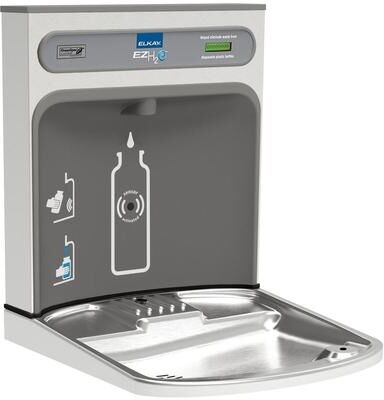
Elkay EZH2O RetroFit Bottle Filling Station Kit, Non-Filtered Non-RefrigeratedThe Elkay EZH2O® Bottle Filling Station delivers a clean quick water bottle fill and enhances sustainability by minimizing our dependency on disposable plastic bottles. Designed to retrofit existing 115V pushbar-activated EZ style water coolers.1398,49 $*Shipping: 0,00 $Secure redirect to the provider
-
ENVIRONMENT Diffuser Inspired by Delano Beach Club Hotel® - 200mLVegan and cruelty-free. Diffuser that is inspired by Delano Beach Club®. Sunny orange and bergamot are met with a heart of green tea and jasmine followed by notes of lemongrass and a hint of washed woods.43,49 $*Shipping: 0,00 $Secure redirect to the provider
-
What is strictly monotonic now?
A function is strictly monotonic if it is either strictly increasing or strictly decreasing. This means that for any two points in the function's domain, the function values at those points are either strictly increasing or strictly decreasing. In other words, the function does not have any plateaus or flat regions where the function values remain constant. **
-
Is every convergent sequence monotonic?
No, not every convergent sequence is monotonic. A convergent sequence is one that approaches a specific limit as the number of terms in the sequence increases. A monotonic sequence, on the other hand, is one that is either always increasing or always decreasing. While some convergent sequences may be monotonic, there are also convergent sequences that oscillate or have a mix of increasing and decreasing terms as they approach their limit. Therefore, not every convergent sequence is monotonic. **
-
How do you indicate that a function is strictly increasing or non-monotonic in an interval i?
To indicate that a function is strictly increasing in an interval i, you would show that for any two points a and b in the interval i, where a < b, the function value at a is less than the function value at b, i.e., f(a) < f(b). This would demonstrate that the function is strictly increasing in the interval i. To indicate that a function is non-monotonic in an interval i, you would need to show that there exist points a and b in the interval i, where a < b, such that the function value at a is less than the function value at b, and also points c and d in the interval i, where c < d, such that the function value at c is greater than the function value at d, i.e., f(a) < f(b) and f(c) > f(d). This would demonstrate that the function is non-monotonic in the interval i. **
-
How can one recognize monotonic behavior?
Monotonic behavior can be recognized by observing a consistent trend in the data where it either consistently increases or decreases without any significant fluctuations or reversals. One can also look for a clear pattern in the graph or data points that shows a steady and consistent direction. Additionally, calculating the slope of the data points can help determine if there is a consistent increase or decrease over time. **
* All prices are inclusive of VAT and, if applicable, plus shipping costs. The offer information is based on the details provided by the respective shop and is updated through automated processes. Real-time updates do not occur, so deviations can occur in individual cases. ** Note: Parts of this content were created by AI.